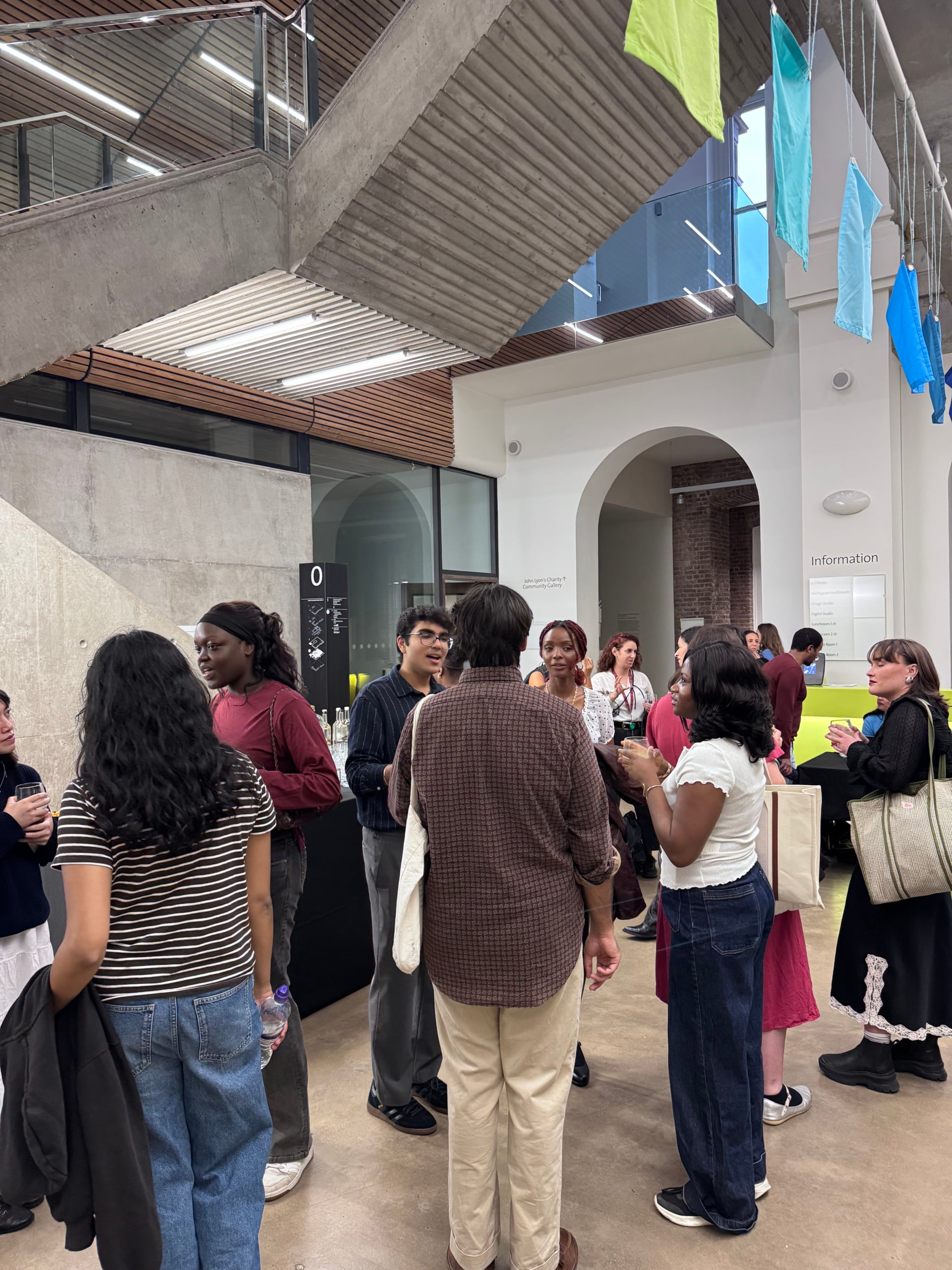
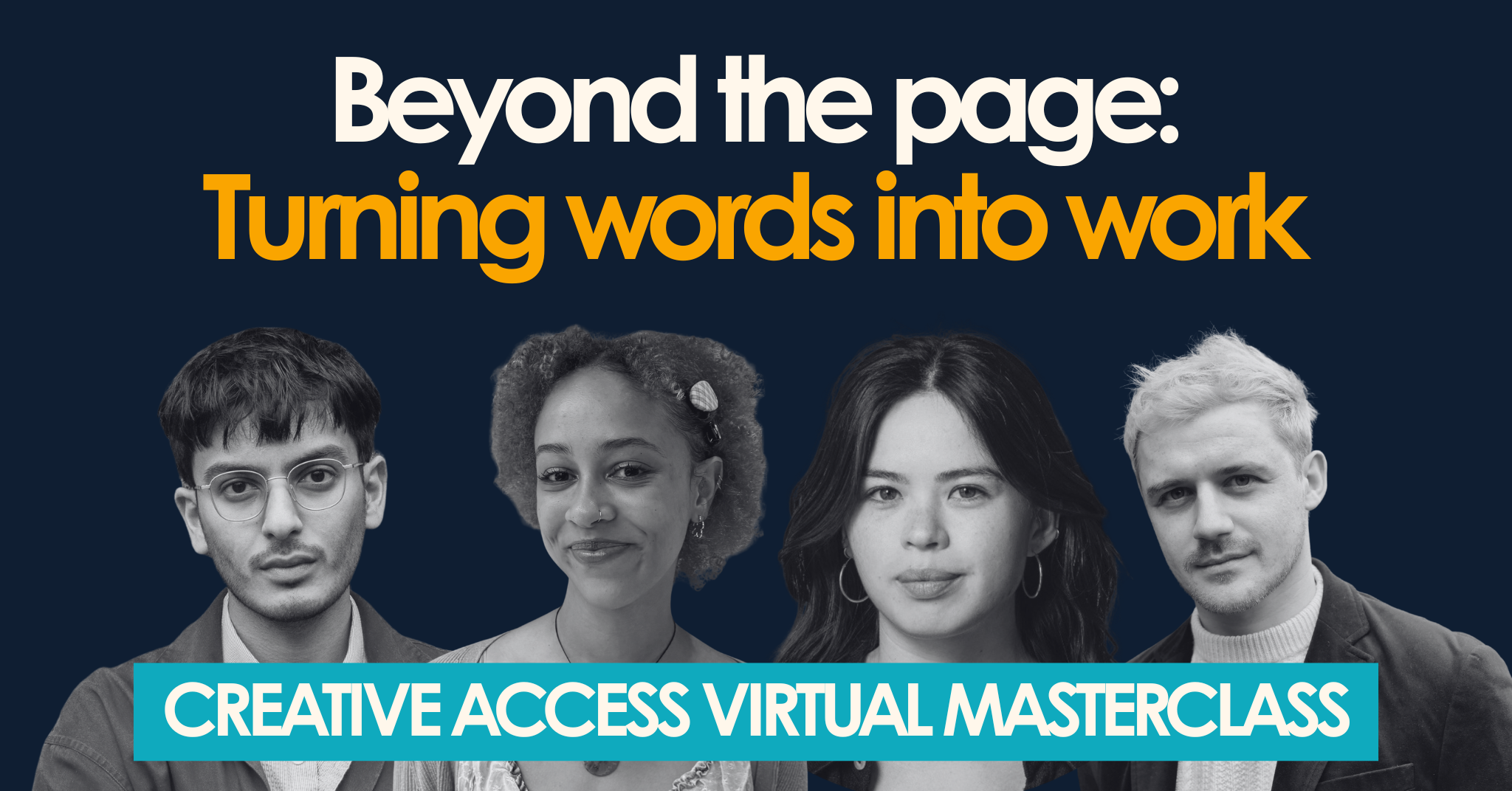
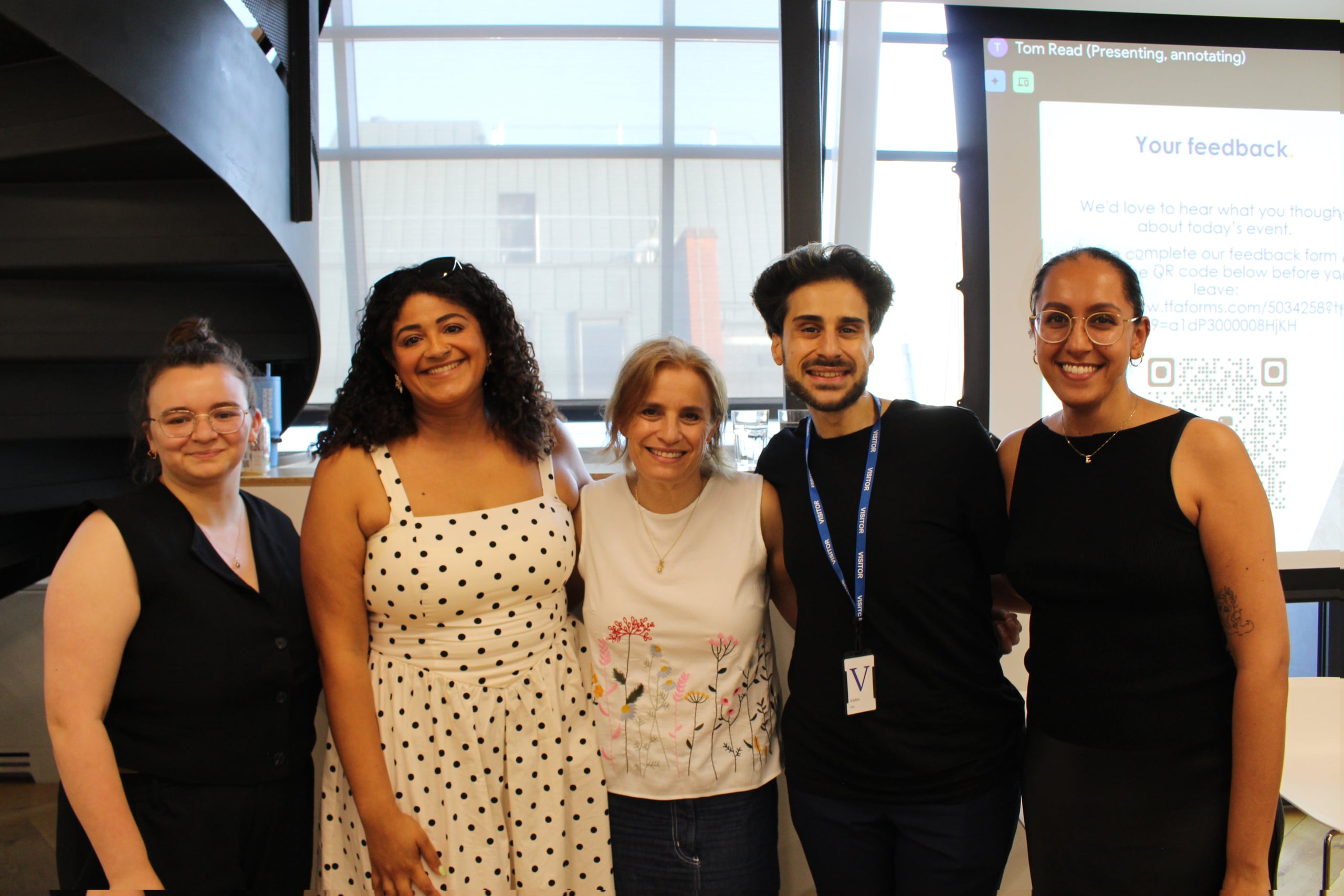
On a warm summer’s evening in July, we tackled a pair of all-too-familiar questions: who gets to call themselves a “writer”, and how on earth do you build a writing career while paying the bills?
This month’s virtual masterclass was a celebration of a practise often perceived as solitary: writing. Despite this perception, community and connection sat at the heart of the discussion. With a panel of CA alumni discussing their writing careers to date, we covered everything from developing a craft and collecting inspiration to chasing rejection. Perhaps most importantly, our talented panellists shared how they tackle what can sometimes feel like the hardest thing: finding the time and energy to actually sit down in front of a blank page and write.
For practical advice and honest reflections on navigating the realities of being a writer, keep reading…
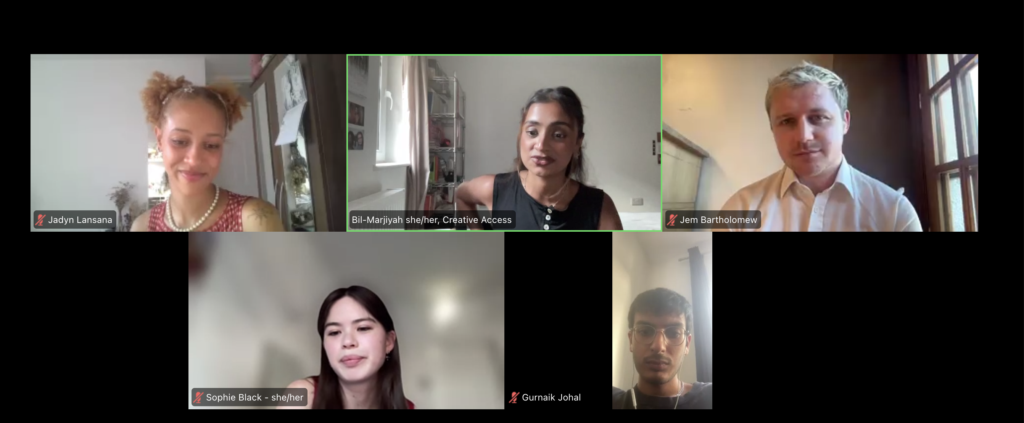
Meet our panel:
- Gurnaik Johal, award-winning author of short story collection We Move and debut novel Saraswati
- Jadyn-Elia Lansana writes for The Writers Herd, has shot a short film, and publishes on Substack
- Jem Bartholomew is a freelance writer and regular contributor to The Guardian and Columbia Journalism Review, among other outlets
- Sophie Black was shortlisted for the Women’s Prize Discoveries Award in 2025 for a novel-in-progress exploring interpersonal dynamics in restaurant spaces
- Bil-Marjyah Rahman, community and partnerships programmes manager, Creative Access (chair)
Everyone’s path is different. How did you find yours?
Gurnaik kicked us off by sharing his own writing origin story. So much of writing is about ego, Gurnaik observed, about having the audacity to expose yourself and your work to other people. With a creative writing degree under his belt and a teacher pushing him to enter his work into prizes and competitions, Gurnaik’s work was shortlisted by The Guardian. He met his agent at a party, and the rest is history.
Jadyn has always been a storyteller, from creating stories and starring in movies on MovieStarPlanet (throwback anyone?!) to using writing to process loss and isolation during the COVID-19 pandemic. Once she realised studying creative writing at university was an option, she didn’t look back. Now, Jadyn describes her writing practise as “life research”. It’s all about “journaling, writing in the margins, and being close to the communities that are important” to her.
Jem shared two major turning points in his writing career. He spent about a year working in bars and in retail to pay the bills while sleeping on friends’ couches to gain work experience in journalism. Then, he secured a role at The Financial Times through Creative Access, which acted as a perfect “training ground for learning to report on money and power”. Next, Jem won a Fulbright scholarship to study a journalism master’s in New York. He spent the year honing his craft, meeting people in the industry, and growing a community which has stood the test of time.
Sophie already had a strong background in academic writing, having written a dissertation on waitressing during her sociology master’s. But it was attending a writing workshop at the ESEA Lit Fest in September 2024 that led her to fictionalise a decade-long hospitality career. By January 2025, she was submitting 10,000 words to the Women’s Prize Trust’s Discoveries award. Picking up some gems at the informative webinar (which you should always go to, says Sophie!), she knew they were looking for potential and promise, rather than the finished product. By spring, Sophie was shortlisted.
Although our panellists’ routes into the industry varied, they share a common theme. At a certain point, each writer decided to detach from fixating over the potential outcomes – like chasing publication, winning awards, or seeking public approval. Instead, they focused on the practise of writing itself, dedicating themselves to improving and enjoying their craft, excavating their passion for the project, and ultimately expressing the truth they felt needed to be told.
Just have fun with it!
Gurnaik emphasised just how much he prioritises play while writing. He’s constantly seeking joy, which made the process of writing his second novel go so much quicker. Actually enjoying what he was writing meant Gurnaik felt inspired to write in all the spare shifts he could find around working full-time, including lunch breaks.
For me, the work itself is the fun part. I’m serving the book, not the audience.
– Gurnaik Johal
Launching a writing career through self-publishing and community-building
Jadyn has undertaken a journey of self-discovery. Initially, she felt a need to rush, to be published as a young person in order to succeed as a writer. But being out in the world challenged that belief. By exposing herself to new literature and people through her work with the Free Books Campaign, publishing work on Substack, and grounding herself in her own experiences, Jadyn feels more confident now than ever.
I’ve learnt a lot about myself through the writing process. Quite stubbornly, I believe in myself and my work. I write because I want to serve the writing, and I want to serve myself.
– Jadyn-Elia Lansana
How to find the time to write and collect the inspiration you need to keep going
Sophie questioned the notion that lots of specific, dedicated time is required to consider yourself a writer.
It isn’t always possible to spend an hour at your desk, or an afternoon hunched over your keyboard. When full-time work, Milktooth Gelato and other commitments need her attention, Sophie looks outward.
We can find writing everywhere, she explained. For Sophie, she finds writing in those vital pockets of quiet and chaos that pad out the busy days – then charts it all in the notes app on her phone. Tube-journey scribbles and table-side observations at local restaurants transform into character inspiration or scene ideas. Whenever she’s felt stuck with her novel, she’ll pull up a different note per day to jumpstart the writing process.
Keep a diary. Write down your thoughts when they come to you, even if you’re about to fall asleep. Collect your inspiration.
– Sophie Black
On knowing where to begin, building momentum and launching a career in journalism
Jem expressed that starting out is often the hardest part. You’re trying to work your way up, all while being more likely to experience financial insecurity, less likely to know anyone in the industry, and constantly finding ways to make ends meet. This stage is hard, but it also offers freedom to explore. Use this time to ask yourself questions, Jem recommended. What kind of journalistic work do you want to produce? Is it long-form journalism or investigations? Food, culture, or something else? Chase curiosity and open yourself up to discovery.
Follow your curiosity. What are you interested in? What do you want to discover? You’re the conduit for the reader, so if you’re passionate about something and then go to write about it, that’s going to shine through.
– Jem Bartholomew
Be interested in people, as well as your story. If you admire the work of someone 5-10 years into their career, reach out to them. Ask to buy them a coffee, and they may offer advice on how to progress, or advise on pitfalls to avoid. If that sounds out of your comfort zone right now, you can read our tips on virtual networking here.
Also, just start. Start pitching your work or posting on blogging platforms like Substack. Build up a portfolio, so you can build up the amount of writing you’re proud of. Jem urged us to keep the focus on the work that we’re proud of and can stand behind. The rest – your advocates, community members and accolades – will follow.
Don’t wait until someone grants you permission. Come with ideas, learn the tools. Just start! Eventually you’ll come into contact with people who want to support your work.
– Jem Bartholomew
Rejections are tough; collect them anyway
Jadyn has learnt the importance of putting yourself and your work out there, regardless of the answer. “If you never ask, the answer is always no.” Rejection is inevitable, but it doesn’t mean that your work isn’t valuable.
Jem told us rejection is a major part of being a journalist, but it’s very rarely personal. Having a pitch rejected could be due to any number of things: they’ve already got something similar, another journalist has already been assigned, the article isn’t framed in quite the right way, budget has run out etc. Just “collect those rejection slips and keep pushing forward.”
Gurnaik has seen behind the curtain. As an editor in publishing, he was constantly thinking about whether he was the right person to work on a manuscript or help bring a project to life. Rejection may feel tough, but it works both ways. It’s just as much about sifting out editors who wouldn’t have been right for your work. It could even be a blessing in disguise.
Sophie reflected on the rejections she’s received in her writing career. 100% of the submissions where she’s directly responded to a brief that centres someone else’s interests and passions have been rejected. It’s led Sophie to question the value of moulding her writing practise to other people’s needs, when it’s such a deeply personal pursuit to begin with. Increasingly, discernment sits at the heart of that, at times vulnerable, decision-making process. It’s more about “finding homes for things I care about and want to bring to life, rather than forcing my creativity and inspiration to fit someone else’s priorities.”
Audience Q&A
How do you build habits and a consistent writing practise?
- Sophie: I find writing consistently really hard! I break it down into chunks, and reward myself by colouring in a square every time I hit 1,000 words so my progress is visible.
- Gurnaik: I spend the last 10 minutes of a writing shift making notes for what I’m going to tackle in the next one.
- Jadyn: I free-write and handwrite everything first. That way, I worry less about structure or spelling or filling a page.
How do you know when something’s finished?
- Jem: One day, you just have to decide to stop. Try reading your work aloud. It can be easier to realise where you’ve made errors, and understand the rhythm of your writing.
- Gurnaik: Nothing’s ever fully done. When you start to notice that the changes you keep making are making something worse, not better, that’s a good place to stop. Books are made up of 25% writing and 75% editing. Reject the idea that editing should be passive. Trick yourself into being an active participant in the editing process, whether that’s writing by hand, reading aloud, or re-typing a draft from scratch.
Can you share any more tips on balancing writing with working?
- Jadyn: When time feels limited, don’t put too much pressure on yourself to find time you don’t have.
- Gurnaik: Find pockets of time where you can treat writing as a priority. Learn yourself, and when you’re most likely to be productive. If it’s not working, don’t be afraid to do something else, like go for a walk.
- Sophie: Be realistic about what you can prioritise in a day. Writing doesn’t always have to be your number one priority. When it becomes your priority, you will feel it.
To round out the session, our host Bil-Marjiyah asked the panellists to complete the following sentence. Here’s how they answered:
A sustainable writing career is built by…
Gurnaik: Having fun! By enjoying and loving the work.
Jadyn: A stubborn belief that you and your words matter, no matter the context or situation.
Jem: Persistence, craft, luck and community.
Sophie: Lots of people! Conversations, being held accountable by people who are invested. Writing is a group effort.
This masterclass served as an important reminder that, although writing may feel lonely at times, community is everything. Thank you to our incredible panel – Gurnaik, Jadyn, Jem and Sophie – for sharing their words, time and wisdom with us.
And, of course, a huge thank you to everyone who attended our July masterclass. You kept the chat lively, the questions coming, and our spirits high while we discussed what can sometimes feel like a solitary, distant dream.
Interested in joining another Creative Access masterclass? Register with us today and keep an eye out on our opportunities board for upcoming masterclasses. See you at the next one!
About our speakers
Gurnaik Johal is a writer from west London. His 2022 collection We Move won a Somerset Maugham Award, the Tata Literature Live! Prize and the Galley Beggar Short Story Prize. In 2025, he was named an Observer Best New Novelist, and Saraswati, his debut novel, was nominated for the Waterstones Debut Fiction Prize, the Sunday Times Charlotte Aitken Young Writer Award, the Jhalak Prize and the RSL Ondaatje Prize, and also won a Somerset Maugham Award.
Jadyn-Elia Lansana is a starry-eyed creative writing master’s graduate finding her way into the books industry and community work. She writes for The Writers Herd, has shot a short film, and publishes on Substack. Most recently, she joined the Free Books Campaign team, an organisation that helps make arts and literature free and accessible to all. Alongside her role as a committee officer at the Association for Laboratory Medicine, Jadyn is a lover of words and people, tending to the beautiful first sparks of her career. She intends to keep finding ways to connect with others through culture, identity, and literature.
Jem Bartholomew is a freelance writer and regular contributor to The Guardian and Columbia Journalism Review, among other outlets. He is currently writing his first book, a work of narrative nonfiction about poverty in the UK. Jem started his career as a reporter at FT Specialist through Creative Access – where he won Best Newcomer in the State Street Institutional Press Awards – before spending a couple of years in New York City. Back in London now, he still misses the pizza.
Sophie Black was shortlisted for the Women’s Prize Discoveries Award in 2025 for a novel-in-progress exploring interpersonal dynamics in restaurant spaces. She uses fiction to combine her first-hand interest in hospitality and passion for workplace inclusion with learnings from a masters in Gender, Media and Culture from Goldsmiths University. Sophie is currently the Programmes and training coordinator at Creative Access and in her spare time, an enthusiastic ice cream churner for small business Milktooth Gelato.
Useful organisations, software and resources to support your writing journey:
- Casual Readers Club: a storytelling platform and IRL reading community because reading is a communal practice.
- ESEA Lit Fest: the UK’s award-winning East and South East Asian literary festival.
- Fact-based storytelling: an online writing course led by Jem Bartholomew at City St George’s, University of London.
- Free Books Campaign: a non-profit dedicated to bridging the gap in access to literature for all ages.
- Freelance Writing Jobs: a weekly newsletter by Sian Meades-Williams, listing the UK’s best freelance writing opportunities and calls for pitches.
- Fulbright scholarship: a programme offering fully funded academic exchange grants for international study, research, and lecturing in the US.
- JournoResources: a platform connecting writers with journalism jobs.
- Scrivener: a comprehensive writing software built by writers, for writers. Paid, with free trial option available.
- Study Hall: a resource for freelancers and media workers.
- Substack: a publishing platform for writers.
- The Writer’s Voice: a podcast where New Yorker fiction writers read their stories from the magazine.