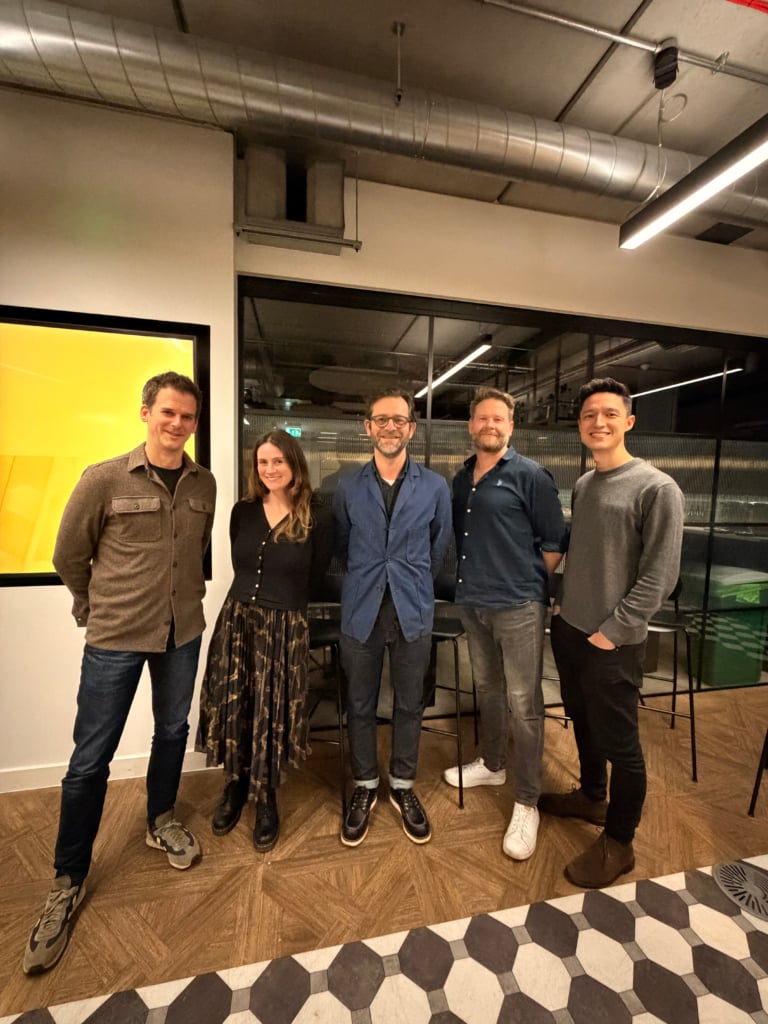
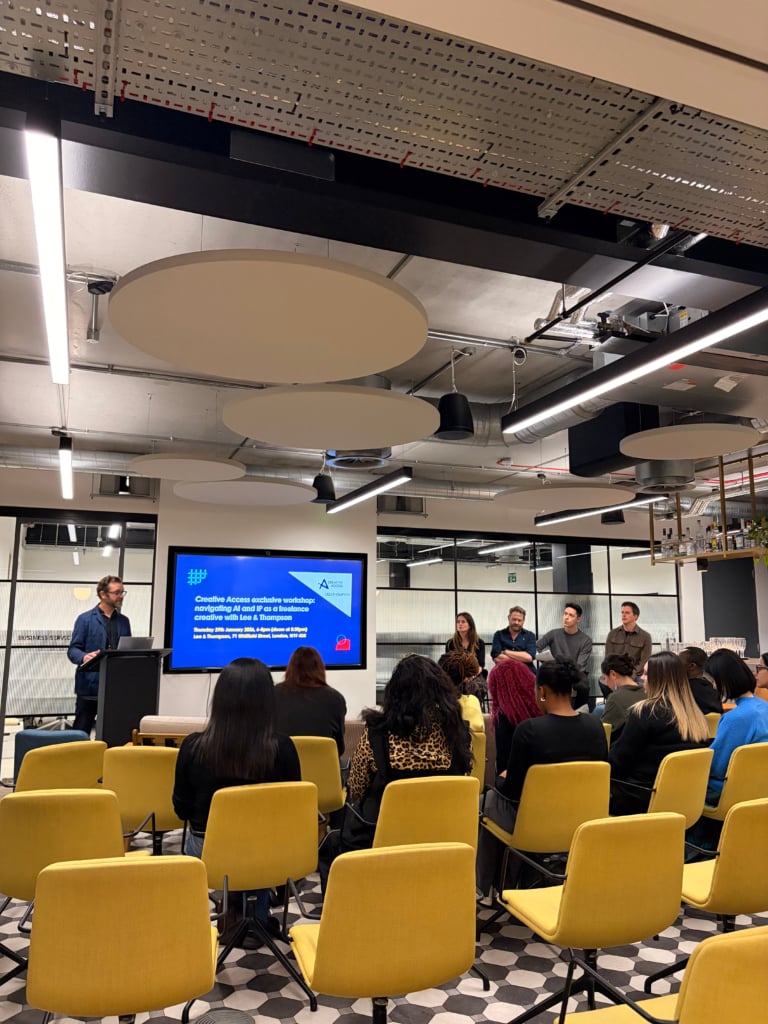
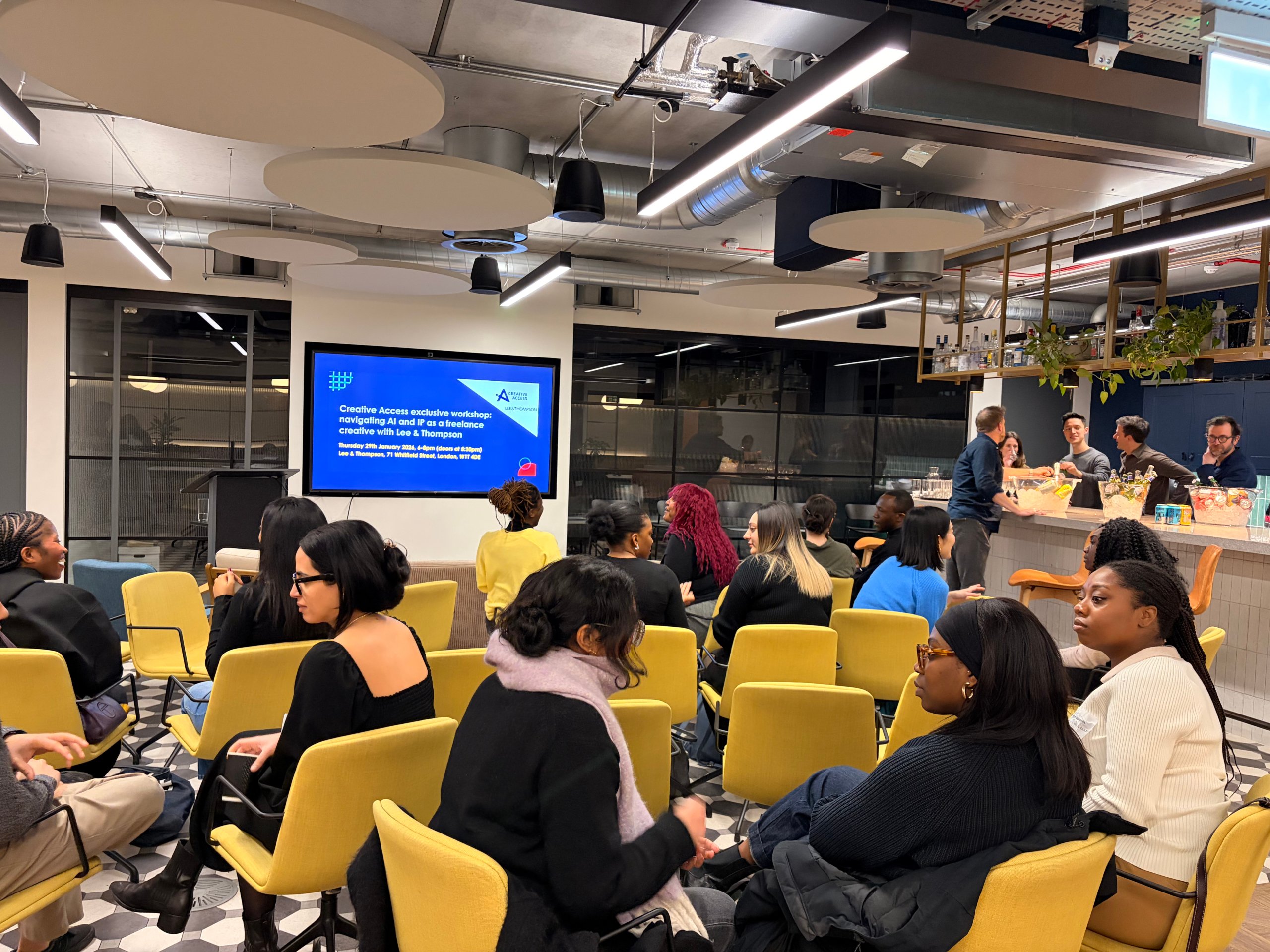
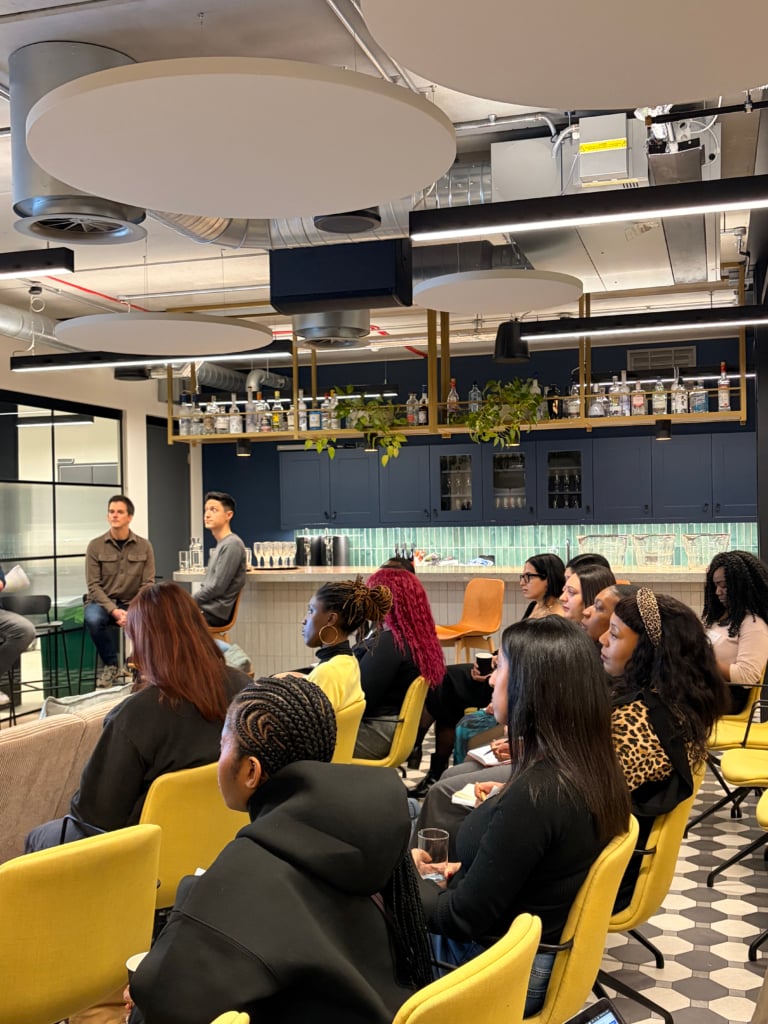
Last month, Creative Access and Lee & Thompson hosted an insightful workshop for freelance creatives exploring copyright, AI, employment law, and getting paid. The session brought together legal experts and freelancers across film, TV, and digital media to discuss practical ways to protect creative work, navigate emerging technologies, and manage client relationships effectively.
Our expert panel from Lee & Thompson included:
- Andy Moseby, partner and head of digital & tech
- Will Everitt, partner specialising in music
- Martin Tynan, senior associate in employment law
- Fi Tudur, senior associate, TV & film
- Simon Boyden, chief financial & operations officer
Each shared insights drawn from their experience supporting creatives across the media landscape.
Copyright and intellectual property (IP)
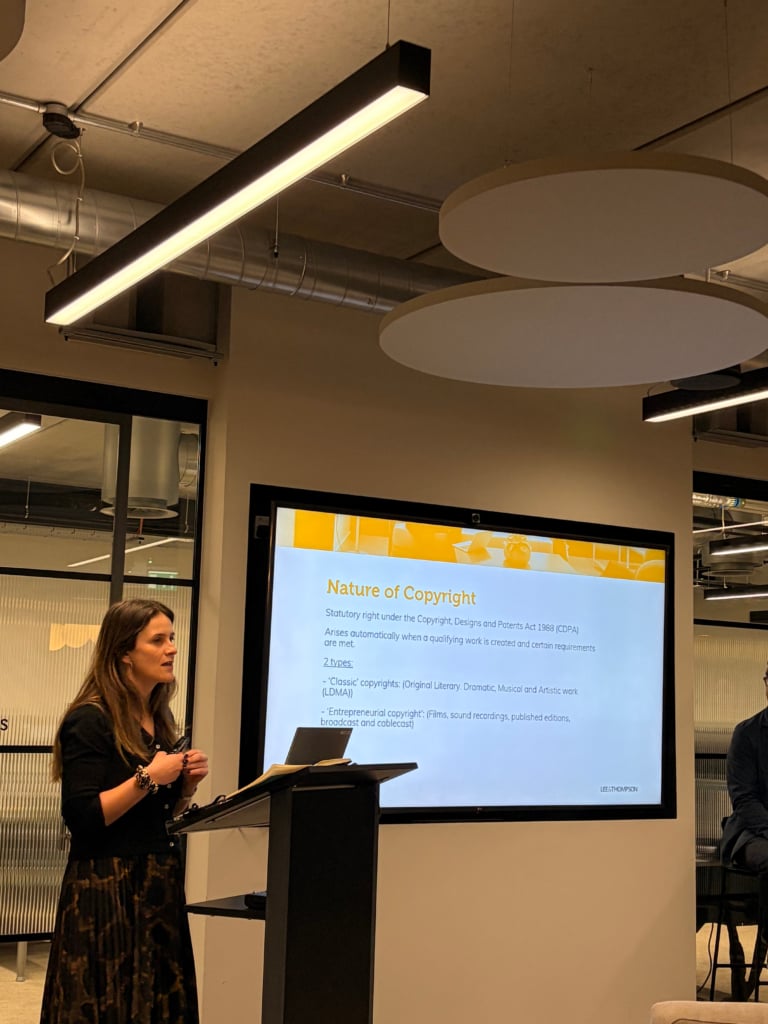
Fi opened the discussion on copyright and IP, explaining that copyright arises automatically when a work is created and must be both original and recorded. Classic copyright protects literary, dramatic, musical, and artistic works, securing the expression of ideas rather than the ideas themselves. Entrepreneurial copyright applies to sound recordings and broadcasts, where ownership usually belongs to the producer or broadcaster. Fi emphasised that transferring copyright (or any part of it) requires written and signed documentation; informal or verbal agreements do not confer exclusive rights.
AI and the creative industries
Andy explored AI and its implications for creatives. He described the internet as a large copying machine, noting that anything uploaded online is copied. AI networks scrape data at such scale that opting out is almost impossible, especially as new AI companies emerge every day. He clarified that there is no legal uncertainty around copyright: current laws already protect creative work.
Andy outlined the policy options under review for 2026. Option 0 is to do nothing, leaving copyright laws as they are. Option 1 would strengthen copyright, requiring licensing in all cases. Option 2 proposes a broad data-mining exception, while Option 3 (currently the government’s preferred approach) allows right holders to reserve their rights under transparent rules. He highlighted that most creatives favour enforcing current law and strengthening copyright through licensing rather than allowing broad exceptions.
Employment, tax and freelancer agreements
Martin provided an in-depth look at employment and tax considerations. Freelancers may be classified as employees, workers, or self-employed. Employees receive full legal protection, workers have partial rights such as holiday pay and minimum wage, and self-employed individuals have limited statutory protections. These distinctions also affect tax obligations, including PAYE for employees versus self-assessment and IR35 for contractors.
Martin emphasised that long-form agreements are essential. They should clearly define the scope of services, intellectual property, confidentiality, credits, termination, exclusivity, and post-termination restrictions. Clear agreements protect both freelancers and clients and provide clarity in case of disputes. He encouraged open dialogue with clients and accountants to ensure alignment and compliance, particularly in sectors such as film, TV, and music.
Getting paid as a freelancer
Simon shared practical advice on managing invoices and payments. Freelancers were encouraged to set clear payment terms, obtain purchase orders early, request upfront or staged payments, and follow up consistently. Escalation internally or externally, union support (e.g. BECTU), or legal advice may be necessary if payments are late or clients become insolvent.
Audience questions raised common challenges, including: “What if a client goes bankrupt?” Martin explained that freelancers become unsecured creditors, with recovery dependent on the administrator and remaining assets. This underscores the importance of issuing invoices promptly and knowing who controls the company. Other tips included negotiating discounts to incentivise early payment, using accounting tools or automated invoicing, considering invoice factoring, and, as a last resort, working with debt collection agencies. Above all, freelancers were reminded to have confidence in the value of their work: quality output justifies the fees charged, and assertive communication is key when chasing payments.
Closing reflections
The workshop concluded with a lively Q&A covering copyright, AI, employment, agreements, and payment challenges. Freelancers left equipped with practical tools to protect their creative work, manage client relationships, and make informed decisions in a rapidly evolving creative landscape.
Thank you to our brilliant panellists, to Lee & Thompson for hosting us, and to everyone who joined us for an energising and thoughtful conversation.
To stay connected with future Creative Access events and opportunities across the creative industries, make sure you are registered with us and keep an eye on our Opportunities Board.